Thursday, June 10, 2010

Type O Negative Blood Needed

The following is from an American Red Cross E-mail:


Need for Type O Negative Blood Reaches Critical Levels

The supply of type O negative blood at the American Red Cross has dropped to critically low levels.

If you are a type O negative donor you can make the difference between an adequate blood supply and a summer shortage.

Type O negative blood is always in high demand because it can be transfused to patients with any blood type, especially in emergency situations.

While all blood types are needed during the critical summer months, the Red Cross urges those eligible donors with blood type O negative to make and keep appointments to give blood this summer.

We highly encourage all type O negative blood donors who meet the eligibility requirements to double the difference by becoming a double red cell donor. If eligible, you are able to give two donations at once.

Please call 1-800-RED CROSS or visit redcrossblood.org to find a convenient blood donation location and to schedule a lifesaving blood donation appointment.

Thank you from your Red Cross and the hospital patients we serve.


Thursday, May 27, 2010

The God of Peace

In many conversations I am sadly reminded that very few Christians worship my God. Most Christians worship the God of tolerance. I worship the God of peace.

This very important difference is counted as insignificant semantics by most people. But semantics are never insignificant. I wonder what people really mean when they say, “That’s just a matter of semantics.”

Do people even think of what they are saying? Do they understand what semantics are? The semantics are the meanings of the words. If words are being used with meanings that are at variance, what is really being communicated between the users of the words?

Since my God is the Word, I never count semantics as insignificant. Since my God emphatically declares that His words have power to effect what He says, I count all words as important, acknowledging that words will either collaborate with or counter His words.

My God is not a god of tolerance. Tolerance is an allowance or accommodation at a distance. It is a “putting-up-with” something or someone. True agreement is not reached and true reconciliation is never achieved. Tolerance merely attempts to overlook or in some way compensate for what is lacking.

Peace, however, true peace, is the removal of that which causes offense. The cause of unrest is removed and thus peace is the result. True unity is the basis of peace.

The God of the Gospel is the prince and king of peace. He rules not by permissiveness, nor by force. Permissiveness allows the problems and the continuance of unrest to linger. Force hardens the heart. Peace, however, creates a new heart of willing subjugation to what is good for all. Peace overrules all selfishness and creates the bond of unity. Where true agreement rules, no cause for disagreement and disharmony ever arises.

My God condemns disunity and drives it far from Him and His. In His communion unity is fostered through love. That which is wrong and untrue is not tolerated but is overcome through love. Love works no ill to the neighbor. Romans 13:10.

With tolerance exists disunity. With disunity exists division. Division is separation or disconnection. This is the opposite of communion and peace. In my God’s communion peace rules. Therefore each person speaks and all agree. No bristling occurs. No putting-up-with the speaker is necessary. For if disagreement is found, the matter is discussed in connection with God’s words until agreement results. Then all are in agreement and peace continues. All hear the other and all say together, “Amen!”

Amen is never effected by tolerance. Amen is the language of peace. Amen and peace are of God. This is what my God declares. This is what my God brings to be. This is what my heart and soul and mind crave. To this I cling with body, heart, mind, and soul. I do not desire a god of tolerance, not when the God of peace has come near. Him I will trust. Him I will love. Him I will preach. In Him I will live.

Tolerance & Peace

The dove may tolerate the cat . . .


. . . but does tolerance make for peace?

Thursday, May 20, 2010

85% Unity — It’s Time


A paper produced in 2008 has received high acclaim from certain people. The paper is entitled: IT’S TIME: LCMS UNITY AND MISSION - The Real Problem We Face and How to Solve It. The paper is promoted through links on various blogs and web sites. In fact, it now has its own URL and web site here.


This image from the cover of the paper is very clever and attractive. It is very artfully designed and appealing. Everything about the paper is crafted expertly and has the appeal of a supurbly well prepared steak dinner.

I have repeatedly contemplated writing a response, as the premise of this paper causes me deep distress. The premise of the paper is that something less than 100% unity can be called acceptable and even be set forth as a noble goal. Several times I have taken notes and have sought Scripture verses to show the fallacy of this notion. Every time I began such an endeavor I realized that such methods have little effect upon those who have already accepted this notion as worthy of consideration and perhaps even acceptance.

In this paper the author presents the following claim:

It is possible to unify 85% of the Synod in doctrine, practice and mission, I’m convinced.

It disturbs me that the ludicrousness of this does not immediately strike others as it does me. This notion is entirely preposterous, yet many find it perfectly reasonable.

As a means of setting forth just how preposterous this notion is, the high priestly prayer of the Lord Jesus is presented below, with the notion of 85% inserted where He prays concerning unity. It is not inserted in every possible instance, but in the more significant places it has been inserted. Read for yourself how dramatically this notion offends when this majestic prayer of the Lord Jesus is made to conform to this notion of unity.

These words spake Jesus, and lifted up his eyes to heaven, and said,

Father, the hour is come; glorify thy Son, that thy Son also may glorify thee: As thou hast given him power over all flesh, that he should give eternal life to as many as thou hast given him. And this is life eternal, that they might 85% know thee the only true God, and Jesus Christ, whom thou hast sent. I have glorified thee on the earth: I have finished the work which thou gavest me to do. And now, O Father, glorify thou me 85% with thine own self with the glory which I 85% had with thee before the world was. I have manifested thy name unto the men which thou gavest me out of the world: thine they were, and thou gavest them me 85%; and they have kept thy word 85%. Now they have known that all things whatsoever thou hast given me are 85% of thee. For I have given unto them 85% of the words which thou gavest me; and they have received them, and have known 85% surely that I came out from thee, and they have believed 85% that thou didst send me. I pray for them: I pray not for the world, but for them which thou hast given me; for they are 85% thine. And all mine are 85% thine, and thine are 85% mine; and I am glorified in them. And now I am no more in the world, but these are in the world, and I come to thee. Holy Father, keep through thine own name those whom thou hast given me, that they may be 85% one, as we are.

While I was with them in the world, I kept them in thy name: those that thou gavest me I have kept, and none of them is lost, but the son of perdition; that the scripture might be fulfilled. And now come I to thee; and these things I speak in the world, that they might have my joy fulfilled 85% in themselves. I have given them thy word; and the world hath hated them, because they are not of the world, even as I am not of the world. I pray not that thou shouldest take them out of the world, but that thou shouldest keep them from the evil. They are not of the world, even as I am not of the world. Sanctify them through thy truth: thy word is truth. As thou hast sent me into the world, even so have I also sent them into the world. And for their sakes I sanctify myself, that they also might be sanctified through the truth. Neither pray I for these alone, but for them also which shall believe on me through their word; That they all may be 85% one; as thou, Father, art 85% in me, and I 85% in thee, that they also may be 85% one in us: that the world may believe that thou hast sent me. And the glory which thou gavest me I have given them; that they may be 85% one, even as we are 85% one: I 85% in them, and thou 85% in me, that they may be made 85% perfect in one; and that the world may know that thou hast sent me, and hast loved them, as thou hast loved me. Father, I will that they also, whom thou hast given me, be with me where I am; that they may behold my glory, which thou hast given me: for thou lovedst me before the foundation of the world. O righteous Father, the world hath not known thee: but I have known thee, and these have known that thou hast sent me. And I have declared unto them thy name, and will declare it: that the love wherewith thou hast loved me may be in them, and I in them. (John 17:1-26)


Perhaps a person may respond, thinking: “That is blasphemous!” At least, I am hopeful that others may see that this is so. To speak of any percentage of unity as a goal for the saints is truly blasphemous and should never be found acceptable among those professing to be of Christ.

Monday, May 17, 2010

My Favorite Thing!

My Favorite Thing!

I received an e-mail entitled “What Pets Write IN THEIR DIARIES..........” It has a photo of a dog with excerpts from what it would write in its diary, and likewise with a cat.

What Pets Write IN THEIR DIARIES..........

Excerpts from a Dog's Diary......


8:00 am - Dog food! My favorite thing!
9:30 am - A car ride! My favorite thing!
9:40 am - A walk in the park! My favorite thing!
10:30 am - Got rubbed and petted! My favorite thing!
12:00 pm - Lunch! My favorite thing!
1:00 pm - Played in the yard! My favorite thing!
3:00 pm - Wagged my tail! My favorite thing!
5:00 pm - Milk Bones! My favorite thing!
7:00 pm - Got to play ball! My favorite thing!
8:00 pm - Wow! Watched TV with the people! My favorite thing!
11:00 pm - Sleeping on the bed! My favorite thing!


Excerpts from a Cat's Diary......


Are the excerpts from the Cat’s diary really necessary?

I think that for this occasion I’d rather not supply what the cat wrote.


However, the dog supplies an helpful attitude.  I have encountered a few cats that display at least a somewhat similar attitude, but very few.

The dog stands as a lesson for life in this old world of sin and corruption.  Even in this fallen world God still blesses abundantly.  God has not stopped being gracious and loving and generous.  Yet I often find myself robbed of the rich and full enjoyment of His goodness on account of my ingratitude.  How often I have been less than truly happy, many times even miserable, even though God’s blessings are innumerable.  His goodness is too great and wonderful even to be rightly accounted.

Truly there is reason for sadness, too. The continual compromises amongst those claiming to be the Church are especially grievous. Yet, where the saints gather to the pure Word and Sacraments, God’s riches continue to flow without measure. His grace, mercy, and peace are abundantly supplied in His holy Church, wherever it is found. And in this especially I find myself responding like the seemingly silly doggie. In all of the activities of the divine liturgy I find myself saying, “My favorite thing!”

God grant that this carry over into my daily walk by faith.


Sunday, May 16, 2010

The Power of Lies

How powerful are lies?  Do lies actually have any power at all?  What do lies ever accomplish?  What do lies ever establish or build?

Lies always, always fall short.  Lies never, ever fulfill.  Lies are dependent upon deception.  Lies are dependent upon acceptance.  Lies are dependent upon successive lies.

The Truth, however, depends upon nothing.  The Truth is of itself fulfillment.  All things find fulfillment in the Truth.  All things are validated by the Truth.  The Truth never falls short.  The Truth remains constant through every circumstance.  The Truth is that upon which all things depend.

While lies always break down and collapse into corruption, the Truth stands forever.  Lies bewilder, but the Truth leads into the light of knowledge and confidence.  Lies leave one to abandonment and discouragement and distress.  The Truth holds one steadfast in hope and peace.

How then is it that everyone continues to turn to lies and half-truths, when the Truth is ever near?

A Homeless Refugee of Royal Claim

Our back yard seems to be a thoroughfare for many of the neighborhood creatures.

After the stormy and rainy weather broke, allowing a bit of sunny and pleasant weather to nudge its way into the later afternoon hours, I noticed two squirrels, a rabbit, and many birds enjoying our landscape.  Watching the rabbit in particular, I wondered about the several cats who frequently inspect our back yard.


This cat is one of the more frequent visitors.  I see this one quite regularly.  It seems to sleep here some nights.  Sometimes it seems to stay beneath our deck and sometimes under my lumber and pipe storage rack.

Today it seems to have claimed our air conditioner compressor unit as its own luxurious throne.


In my many encounters with this cat, I often have spoken to it.  I have never tried to make friends, however, as it does not belong here.  Nevertheless, I enjoy speaking kindly to it.  It often has stopped to look to see how I would act, and seems to give a shrug of relief when I do not act cruelly or threateningly.

At any rate, today it contentedly made use of our kitty lounge and permitted me to take its photograph.

Saturday, May 15, 2010

WELS & LC-MS once one?

Today I read the following question on my Facebook page:


Question for LCMSers (pastors, laymen, whateva). Since the WELS and LCMS were in fellowship at one point, wouldn't that mean that the LCMS at one point agreed with the WELS views of fellowship, women's suffrage, and the Office of the Ministry? I'm wondering whose position changed, if any?


The answer may be that both changed, but not so much on these issues, but more on how much heterodoxy matters.  The WELS determined that heterodoxy matters just a little more than the LC-MS determined.  Even this is not accurate, it would be better to say that for the WELS their claim to orthodoxy mattered more than with the LC-MS.  The WELS counted themselves more orthodox than the LC-MS had become.

To understand the significance of this one needs to read what Francis Pieper teaches on this matter in his “Christian Dogmatics”, the long-standing standard doctrine textbook for seminarians in the two synods.  In volume III, beginning on pg. 422, Pieper defines orthodoxy and heterodoxy.  He condemns heterodoxy and insists that it must be avoided.  Then, however, he allows that the heterodox communions can be called “Churches in so far as they still retain enough of the Gospel of Christ that men can come to faith in Christ and thus can become true children of God.”

For both the WELS and the LC-MS, following this understanding of Church and fellowship/communion, the issue is not one of orthodoxy versus heterodoxy, but rather it is a matter of better or worse.  Who is the better Church is the question.  Are they good enough that we can tolerate them?

True unity in the faith was not really the issue.  The real issue was that the LC-MS had moved a bit too far for the WELS to tolerate.  (The LC-MS did the same with the ALC.)  The WELS did not cease calling the LC-MS a Church.  Neither did they cease calling the LC-MS Christian.  No, they determined that they had to stand apart from their fellow Christians, not on the basis of them being outside the communion of the saints, but as not being in their communion.

This false view of Church and Communion has led to the demise of both church bodies.  Both church bodies or communions have walked the road of tolerance.  Today, both church bodies have enormous degrees of diversity and yet they each still count themselves as orthodox.

In the revelation given to John, the Lord Jesus condemns tolerance and threatens to take away the preaching office, that is the Holy Ministry, from those who practice tolerance.  He warns that they will lose their identity as the Church and therefore will no longer be able to stand as the light of the world.  Why?  Because they will have tolerated that which is false.  Truth and falsehood cannot be mingled.  Truth that has been mingled with falsehood is no longer the truth.

Thus even among the so-called Lutheran bodies there is division rather than unity, but each continues to call the other Church.  By this they say that their faith is in one who lies, because they call Jesus a liar.  This is why they preach not Jesus Christ and Him crucified, but the WELS and the LC-MS.  This is why the Church Growth Movement has taken over both church bodies.  This is why both church bodies look more and more like those whom they officially denounce and yet call Church.

This is the way of the Pharisees.  This is utter hypocrisy.  It has the same effect as in the days of old.  It has the same effect as when the Pharisees encountered the one whom they professed to worship.  Their worship was of their own making and when the Lord confronted them in their hypocrisy they rejected Him.  They chose rather to seek to preserve their nation and temple and way of life and worship.  Today many faith traditions call themselves Christian, choosing various traditions and manners, clinging to certain basic or essential doctrines but allowing that other matters can be compromised and still be called Church.  In the end they each get what they have chosen, they get to boast of being the Church and to count themselves as more the Church than the others or more orthodox or more friendly or whatever other more is better in their judgment, all part of a loosely defined identity in which no one is really wrong, merely not right enough to stand with “us.”

We Care About Mission Money


Whenever I receive an envelope in the mail with this return address and insignia, I know that I am being hit up for money. I know that this group has one and only one interest concerning me and my family, like the Federal Reserve’s Internal Revenue Service, they want my money.

The material enclosed always includes a letter that begins like this one:


The intent of the letter is to inform me how much the LC-MS cares about mission work and the spread of the Gospel so as to move my heart to give them money. Isn’t that lovely? The LC-MS wants me to know how much they care about the Gospel and about mission work and about missionaries and about the sharing of the Gospel on the home front and in the military. Perhaps I will refrain from the sarcastic reminders of the many ways in which the LC-MS has withdrawn support for this work and misused the people’s monies for other-than-Gospel purposes. Perhaps I’ll let those who are in the know reflect upon and react to those issues.

This month’s money request has this very carefully chosen and attractive cover on the envelope:


“GOING where God leads us...” is what it declares. The emphasis is on going. Let’s get going. All CAPS are used for going. “where God leads us...” is given a lesser emphasis. This is what concerns me to a much greater degree than the fact that I continue to receive assaults upon my conscience in attempts to obtain my money.

This seemingly insignificant variation in emphasis has very significant impact upon the practice of those who hold it. Thus the pursuit of my money. With the primary emphasis being on GOING, the practice that follows this emphasis is on works of men. Perhaps it is actually the other way around. The preponderance of the focus on the works of men drives the emphasis on GOING.

This is very likely the biggest false doctrine attached to missiology and evangelism. The mission is not comprised of the works of men. The Gospel is God’s work, work in which He includes men. This false doctrine, which reverses the works of God and men, changes everything. Thus the LC-MS World Mission organization is not even concerned about me and my spiritual well-being. They are not in the least concerned about whether or not my wife and I have survived the horrendous evils that the LC-MS has perpetrated against us, nor concerning the hundreds of other pastors who have been abused. Their only concern is to attempt to persuade me to give them money to GO.

Yet they have the audacity to claim as their motto: “GOING where God leads us...” The church body is divided to such a degree that some are hoping to regain 50-80 % unity in the future. Where is the evidence of the church body and its missiology being directed and led by God? Do the Scriptures ever give any indication whatsoever of the apostles considering seeking financial support from beyond those with whom they are in communion? Did the apostles ever indicate in any way that mission work could be effectively pursued apart from 100% unity in doctrine and practice?

When unity in doctrine and practice is the primary concern, what is the result? Is not unity the result? When unity exists, do the people not of their own accord give from their hearts for the work that the Holy Spirit urges?

Is this not the problem in the churches today? Borrowing from a very common cliche, the cart is being hitched in front of the horse. Under such conditions, the horse struggles even when whipped severely. Is it possible that the churches will someday remember that the mission begins with teaching, that is, Baptism, as the Lord of the Church declares in Matthew 28? The mission begins with proper catechization of the Baptized within the congregation. Proper catechization includes regular participation in the Eucharist, by which true unity is embraced and made real. How many churches today completely ignore this ultimate manifestation of unity and proclamation of the Lord’s death, that is, the pure Gospel? How many churches never even discern the body of Christ at this most rudimentary and essential and defining level? How then can they imagine themselves to be led by God in anything, when they openly defy what God has ordained for the life of His Church on earth?

Christ declares Himself to be the way, the truth, and the life. The way cannot be discerned or acknowledged apart from the truth. Morever, the life of the Church cannot in any way be divorced from or contrary to the way and the truth. Christ is the way, the truth, and the life.

When churches forget this as the foundation of the Church, when churches forget that only pure administration of the Gospel and Sacraments has the effect that God promises for the Church, how can they imagine that they have the ability to go forth by God’s leading? If they want to receive God’s leading, they really need to listen to what He says. Don’t they?

When they remember this, they won’t need to reach out for money and they won’t need to reach out with the Gospel. For the Gospel is a light and the true Church is the light that God sets up on the hill for all to see so that people will come to the light. Mission work begins with the local congregation. What sort of witness is it to send forth missionaries when even the local congregations do not show forth the light that is to be carried abroad?

Notice that St. Paul did not urge the Corinthians to support mission work. Why not? Because they were the mission that needed the Gospel. They were so divided that the apostle told them that their supper was not the Lord’s Supper. He warned them that they were partaking of the table of demons. Until the unity that the pure Gospel produces was manifest among them, they had no light to show to the world. Thus he called them to repent, to return to the complete unity in which they at first shared together. At the end of the admonishments he finally called upon them to unite with the Galatians, who were also plagued by disunity, in supporting the saints, that is, the Church that was distressed by persecution on account of faithfulness to the pure Gospel.

St. Paul spoke of mission work to congregations that were united in Christ. He even asked them for their financial support. Could it be that the one whom the Lord Jesus called as the apostle to the Gentiles actually knows the manner in which mission work should be pursued? Could it be that the Holy Spirit inspired men to record these things for us to hear so as to be led by God? Whom should be counted as correct, the Holy Spirit and those who were directly inspired by the Holy Spirit, or a bureaucratic organ of a church body created and directed by men? Which is truly the mission of the Church, collecting money for GOING, or standing fast in the unity of the true Faith?

Thursday, May 13, 2010

Absolute Power

An oft quoted saying declares that power tends to corrupt and absolute power corrupts absolutely.


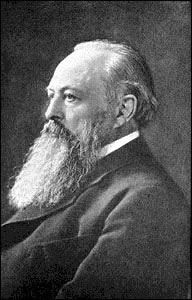
This observation was declared by John Emerich Edward Dalberg Acton, first Baron Acton (1834–1902). The following information can also be view here.


Power corrupts; absolute power corrupts absolutely

Meaning

Literal meaning.

Origin

This arose as a quotation by John Emerich Edward Dalberg Acton, first Baron Acton (1834–1902). The historian and moralist, who was otherwise known simply as Lord Acton, expressed this opinion in a letter to Bishop Mandell Creighton in 1887:

"Power tends to corrupt, and absolute power corrupts absolutely. Great men are almost always bad men."

Another English politician with no shortage of names - William Pitt, the Elder, The Earl of Chatham and British Prime Minister from 1766 to 1778, is sometimes wrongly attributed as the source. He did say something similar, in a speech to the UK House of Lords in 1770:

"Unlimited power is apt to corrupt the minds of those who possess it"


While Lord Acton spoke accurately concerning that which he observed around him, his scope was limited and thus is incorrect.

For there is only one man who has ever had absolute power. He was not corrupted by it. Quite the opposite is true. This one man held absolute power and used it to overcome corruption.

What Lord Acton actually observed is the desire for power and the desire for absolute power. This desire, a.k.a., Lust, is that which corrupts. The lust for power is what corrupts, not the possession or use of power.

The Lord Jesus has absolute power both as God and as Man. He is the Almighty God, the Everlasting Father, the Creator of all that exists in heaven and on earth, both visible and invisible. He is also Man, created by His own almighty power, in whom the very Godhead is manifested. Even though this almighty and absolute power belongs to Him by the very essence of His Godhood, He did not consider it something to be grasped (Philippians 2:6-8). Rather, by His absolute power He made Himself to be of no reputation, making Himself to be a servant who would die in the stead of those who continually corrupt all good things with their ceaseless lusting and grasping.

No, absolute power never corrupts. Absolute power is manifested in the Gospel, the preaching of Jesus Christ and Him crucified. For this preaching is the very power of God, power that accomplishes the impossible, the overpowering of all corruption to regenerate filthy and damned sinners into saints who shine forth with the glory of God.

How sad it is that the lustfulness of mankind seeks to corrupt this Gospel, grasping after God’s power, desiring to claim some form of power for self. The Gospel is incorruptible. It is perfect and holy and without flaw. It regenerates those who live in and by it so that they are made to be members of one holy communion of saints, one Church, perfect and without flaw. Anything less is not of God and is not born of His absolute power. Anything less is merely a gathering of corruption, a gathering of lustful and grasping degenerates seeking power for themselves. From such people comes the cry, “You’ll never find the perfect Church.”

The reason that such a cry is brought forth is the same reason as that of Lord Acton. His reason was that he was looking not to the one who holds absolute power, but to those who lust after and grasp for it for themselves. Where the Lord Jesus is the one to whom the congregation gathers in accord with the means by which He gathers them, that gathering is exactly what He declares it to be: His own perfect and holy body, the communion of saints, the holy catholic Church on earth.

Monday, May 03, 2010

Truth and Consequences

Telling the truth has consequences, both positive and negative. At least so we are inclined to perceive. However, this is not really true. Is it? Does telling the truth ever have a negative consequence?

Well, the truth can be told in a way that is not in keeping with the truth. Those who live as reconciled to God are moved by the Holy Spirit to speak the truth in love. (Ephesians 4:15) Such speaking of the truth often has painful effect, but is presented for good and not for evil, for ultimate healing and not for ultimate harm. Such speaking of the truth is not rooted in anger or vindictiveness but in compassion and concern.

The problem is that we are sinners, corrupted through and through according to our sinful nature. This corruption is complete, so that even when we speak the truth in love, our sin shows through. Not only is the sin of the speaker at issue, but also of the hearer.

For someone like me, this makes me hurt when I speak the truth to someone who feels hurt by what I say. Then I examine and reexamine my statement. And even when I am confident that I have spoken the truth, and even when I am confident that I spoke the truth with loving intentions, I still encounter my own sinfulness and weakness.

In the post below in the comments I stated: “It seems to me that in the future I should only make direct reference publicly to posts with which I agree, and address other matters simply as observations. Perhaps this would not give the impression of a personal attack on the writer.”

Sadly, even this is corrupted by sin. Having stated such, having reflected upon it further, I realize that I am shrinking back on account of my own feelings of pain. I hate pain. I hate knowing that in some way I have caused pain, especially to someone for whom I care deeply. And since love is the motivation for speaking the painful truth, the hurting person’s pain makes me hurt. My own sinful nature leaves me always in doubt as to the pureness of my motivation. The fact is that I can never claim pureness of my thoughts, words, and deeds.

I must always confess sin and look to my God and Savior for absolution, even concerning what I count as my best efforts. And this is the reason that a Christian addresses painful issues with others, that they may hear of their need for God’s healing forgiveness and walk in the freedom of the truth. Therefore, how can one who walks in the love of Christ remain silent about matters of spiritual concern? How can one comment only on things with which he agrees? Will the love of God remain silent in the face of that which needs to be confronted?

In matters such as this, Luther’s response was that one must act in accord with one’s Spirit guided conscience and sin boldly. One must acknowledge that in this corrupt and evil generation that all of our actions according to their own merit are sinful, and therefore that one must go ahead and act in accord with one’s conscience even though the stain of sin will still show through in even the actions that flow from the best of intentions.

Thus my conclusion is that I must continue to post regarding those things that I believe are wrong as well as those things with which I agree, but that I very much need always to challenge my motives and my words. Love does not stand by silently observing that which is harmful and destructive. Yet neither does love speak out without taking into account how the words may be received. Love cares regarding both matters.

Thursday, April 29, 2010

Terribly Disturbing Doctrine of Prayer

Today I encountered a terribly disturbing doctrine of prayer.  The pastor who posted it imagines this to be godly and helpful.  But it is not the doctrine of the Holy Spirit that He teaches.  Far from it, it is the concoction of one who openly admits that he does not understand how to pray.  The post is entitled, Praying Alone.

Here are the opening statements of the post:


Jesus often spent time praying alone. Throughout the Scriptures we can find pictures of men and women who would go up on a mountain, meditate on God’s Word, and pray. There is great benefit in sitting back, removing yourself from the commotion and distractions of life, and hear what God has to say in His Word, and speak to Him in prayer about what troubles you, confessing your sins, and giving thanks for His mercies.

This is true. I know it is true. But I must admit that I don’t find this a natural practice for me.


To hear this from a pastor is very, very troubling to my spirit.  This poor man lives in a state of depression, according to his other writings.  He finds his life to be dark much of the time.

What he states above is the reason why.  This is very, very sad.

What is even more troubling is his fourth and final word of advice on prayer:


Remember that Christ prays for you even when you don’t pray. If you forget to pray for a day, be at peace! Christ prays for you even when you forget. Jesus is loving and forgiving, and longs to be in your presence. He will pray for you even if you don’t.


This is horrible!  It is absolutely false and destructive!

“If you forget to pray for a day, be at peace!” ???

Are you joking?  Be at peace?  How can I be at peace when I have turned aside from the only source of peace?  How can I be at peace knowing that I have cut myself off from God’s Holy Communion to such a degree that I don’t desire to pray for an entire day?

If this happens to a saint, if one who is baptized realizes that this has happened, the first thing to do is to stop everything and fall to one’s knees and call out, “O Lord, help me!”

Prayer is not something that one tries to do.  It is something that one does!  Trying to pray is ludicrous.  Just do it!  That is how prayer works.

Why pray?  Why did Jesus pray?  He prayed because He needed to hear from the Father.  That is what prayer is all about.

Consider what may perhaps be the most intense prayer ever prayed, the prayer of the Lord Jesus in His time of deepest distress and desperation:

My God!  My God!  Where the hell are You?

That prayer allowed Jesus to hear that the Father had not gone anywhere.  The prayer, prayed from the perspective of the blindness of our sinfulness, gave the immediate relief that Jesus needed.  Notice how His prayer began: “My God!”  That was the answer that He needed to hear.  And He did hear it so that He later prayed, “Father, into Thy hands I commend My spirit!”

I don’t have time this morning to do justice to this, but I want to convey at least this much: STOP TRYING TO PRAY!  Prayer is not from you but from God.  It is the outflow of faith, which is God’s gift.  When you need to pray (which is always, by the way) just do it.

If you need a list to remember what you need to include in your prayers, then those things are not really on your heart as genuine needs anyway.  Begin with what is on your heart right now.

If you need a list, the Lord Jesus gave us the Our Father and said “pray this.”  He also gave us the Catechism, that is, the 10 Commandments, the Creed, the Our Father, Baptism, Confession, and the Holy Supper of His Holy Communion.  Pray these.  The General Prayer of the Church in TLH on pg. 23 is also a wonderfully inclusive prayer.

Prayer is not hard.  It is as easy as recognizing that one has been baptized into God’s Holy Communion where God has named us as His beloved children, children whom He has commanded to use His name in faith, calling upon Him in every trouble, praying, praising, and giving thanks.  If something goes badly, call out to Him.  When things go well, give thanks.  When temptation comes, pray for help.  When sin overcomes, pray forgiveness and believe His promise that you are forgiven in Christ Jesus.

Don’t forget the “Amen!”  If you cannot say “Amen” to what you have prayed, keep praying till you can.  The Lord will lead you into the awareness of His will if you keep praying until you know that what you have prayed is according to His good and gracious will.  Don’t end your prayers with “If it be thy will.”  Notice how Jesus prayed.  He prayed “if it can be” and “if You are willing” but He kept praying until those temptations went away.  Yes, Jesus was sorely tempted to pray these things, but He did not enter into sin by continuing in these temptations.  He did not say “Amen” to them.  He kept praying until He fully acknowledged the will of the Father and said, “But not My will, but Thine be done!”  To this He could confidently say “Amen” and then rose up and went with joy to face the trials and the beatings and the injustice of the cross.

Pray, dear friend, until AMEN is all that is left to say.  Then, you won’t have to convince yourself that you have God’s peace, for God’s peace will guard your heart and mind in Christ Jesus.

Monday, April 26, 2010

Pornography and Other Addictions

Today as I read a post entitled Did Porn Cause the Financial Crisis? at Cranach: The Blog of Veith, I was led to ponder anew the issue of pornography and other addictions.  I have been involved in discussions on this matter in the past, discussions that evolved into arguments.  My emphasis on the Gospel as freedom ran strongly counter to the Gospel as accountability propositions that certain others embraced and promoted enthusiastically and religiously.  My Gospel as freedom preaching was counted as not being realistic or genuinely helpful.

Pondering this matter further today, I came into a deeper understanding of the distinction.  The Gospel is freedom from sin.  The Lord Jesus says so.

Why then do we not believe Him?  Why do we fight against His clear preaching?

The answer is that we do not believe that He really has set us free.  We do not really believe in the efficacy of the means of grace.  We do not really believe in the power of God to save us and set us free.

If we want to be free, we need to hear the Truth.  We need to be carried away from the noise of the world and the noise of our own hearts and minds to the pure preaching of the Gospel of Christ crucified.  There we receive peace in place of our struggles and pardon in place of accountability.

We imagine that we must change our lives, our habits, our actions so as to make them saintly.  Because of this delusional thinking, we become enslaved to our efforts to improve ourselves.

The Gospel teaches us that the change in our lives, our habits, our actions is the outflow of having been made to be saints who live within the communion of the saints.  The Lord Jesus does not tell us to become perfect but to be perfect, even as our heavenly Father is perfect.  It is this Holy Communion of God, into which He baptizes us and within which He nurtures us, that we have been made to be saints who live in the righteousness of God’s Holy Communion.

God tells us, “This is what I have done for you.  This is who you now are in connection with Me.  I have made you to be holy.  Enjoy the life that I have given you.”

When we fail, God does not tell us to seek to be accountable for our actions.  Rather, He calls us back to our baptism, where He takes our accountability from us and purges us from all unrighteousness.  He imputes to us His righteousness as our very own and gives to us His own holy name.  He tells us that as He is, so are we, so that we may walk in the freedom of His goodness.

In Christ the struggle is overcome.  He has taken all of the struggles for us.  He speaks faith into existence in our hearts so that all that remains for us is to walk in the peace that this faith provides.  When this is our fixation, all other fixations become powerless.  His peace, His mercy, His goodness, His love fills us so that these other things are flooded out.

This is the way of the Gospel.

Sunday, April 25, 2010

How Apropos

Yesterday, as I was still thinking of the musings posted below, walking through the Sam's Club parking lot, I observed this license plate:

Saturday, April 24, 2010

Worship Styles

Tomorrow is Sunday, the Lord’s Day, the day for gathering into the name of Jesus to receive from Him the divine service of Word and Sacraments.  As I begin preparations for the divine service each week, I grieve over the many schisms in those professing to be members of Christ’s body.  These schisms are manifested even within the same church bodies, and more, even within the same congregations.

Below are snippets from the “worship schedules” of three LC-MS congregations:


These snippets, as they are displayed on the web page each congregation, demonstrate the schismatic nature of their views of the Church and of the purpose of the Church.

The first demonstrates the definition of Church and Worship that is commonly held among Christians of all of the church bodies.  Tradition is the primary underlying foundation of belief and practice.  The Church and the “faith” of the churches is counted as a “faith tradition.”  Thus some who profess to be Christian are counted as Baptist Christians, others as Catholic Christians, others as Pentecostal Christians, others as OurLabel Christians, and some even as Lutheran Christians.  Then, even within these faith traditions there are further divisions, such as the Evangelical Lutheran Church in America, the Evangelical Lutheran Synod, the Wisconsin Evangelical Lutheran Synod, and the Lutheran Church-Missouri Synod.

Each of these have further divisions.  Yet they all practice as one communion, in theory.  In practice they are no more united than grains of sand on the seashore are united.

The three snippets above are all from congregations within the LC-MS.  They call themselves congregations.  Yet they have multiple services with multiple formats.  The first distinguishes between “Traditional” and “Blended.”  What does this mean?  Particularly, with what is the third service blended?  How has this blending been effected?

The second is from a congregation that began with similar terminology to the first, but now has stepped beyond this to label one of the services as a “Service of Testimony.”  By this they are making it clear what they are blending into their congregation’s doctrine and practice.

The third is from a congregation that has long led the way toward blending with that from outside the doctrine that is counted as their “faith tradition.”  Theirs is the most blatant of the three, openly declaring one of their services to be “Jazz/Praise Worship.”  This congregation used the terms “traditional” and “contemporary” in the past.  Now, however, those have become “Worship” with “Jazz/Praise Worship” highlighted and a new service added as “Healing Service.”

So then, within the LC-MS, what really constitutes Worship?  One can find congregations that hold only to the traditional or historic liturgy and others that blend together whatever suits their fancy.  So, using the LC-MS as an example, what really is worship defined to be?  How does this reflect the Faith?

So-called styles of worship do have meaning.  Each style of worship is the practice of what is embraced as important and defining.  That is why people pick and choose between services.  Within the same church bodies and even within the same congregations styles of worship permit people who embrace different things of importance to share facilities and even a name without actually coming together as one.

However, one must ask whether or not they may in fact really be of the same mind.  When tolerance is the accepted practice rather than unity, is tolerance not the uniting doctrine from which the practice flows?  When tolerance has become the accepted doctrine and practice, what is the reason for the members of a congregation or church body to continue?

When people refer to themselves as X-Christians and Y-Christians and Z-Christians, what are they defining the Christian faith really to be?  Is this reflected in their styles of worship?

Thursday, April 22, 2010

Owl Statues to Scare Away Birds

Do owl statues work to frighten away pesky birds and rodents from gardens and lawns? Here is one site with varying answers from people who have made use of such owl statues.

I have heard people speak of having success in this regard. However, a couple of days ago a friend showed me this:


Here is a closer view:


Upon closer examination the twigs and blades of grass and other material used by some little birds to construct a nest can be seen through the hole in the owl's breast. The little birds completely filled the owl with material, after pecking out the sensor that was in the middle of the owl’s breast.

The sight gave me a chuckle, as it did my friend. It reminds me of the scarecrows that I have seen with crows sitting on the head and arms of the scarecrow.

Tuesday, April 20, 2010

Free Will and Sin

One of the temptations over which we sinful humans frequently stumble is the temptation to argue that free will is the cause of sin. By this we are looking for an excuse for our sinfulness, while simultaneously seeking a way to put the blame for our sin upon God.

We like to argue that God must have in some way built into His creation the capacity for sin. We like to imagine that God did not really create all things truly good, but mostly good, with the potential for bad lying dormant within the substance of the creation. We like to imagine and argue that if God had created us as truly good and without any evil, that we, and our father, Adam, and the angels, including Satan, must have had some flaw deep within that God allowed to exist within us. We argue that sin could not have happened otherwise.

In line with this linear sense of logic is the notion that we have free will, and that this free will had the power to choose either good or evil. But this notion of free will is fallacious.

God did not create us with a free will according to this false notion of freedom. He created us with a will that was free. Adam was created with a will, but that will knew nothing of evil. His will was one with God’s will. Adam was created as a son of God. He was generated by God from the soil and made to be a living soul when God breathed into him the breath of life. Adam knew only the goodness of God. His will was not capable of choosing evil, for no evil existed in the world. No evil was known in the world. Adam was free to live the good life, free to live without choices. All that was good was already available. God had given all things to Adam and authorized Adam to enjoy all things.

Moreover, Adam was created in a relationship of trust. Adam knew nothing of doubting God and His goodness. Adam knew only good, and all good things are of God. Adam had been created with true faith, and faith does not question but simply says, “Amen.” Thus Adam was truly free. He had no worries. Why? He had no worries because he had no doubts. He simply heard what God said and walked in the confidence of God’s Word. Faith is not a choice, but a fact. Faith does not choose; it simply is. Faith, after all, is from God. Faith knows only to look to God and to believe Him.

This did not change until the serpent tempted the woman to doubt. She was tempted to doubt whether God was faithful. She was tempted to doubt that the Man whom God had placed over her had actually preached the Word faithfully. In this connection, she also was tempted to doubt the very Word of God. This temptation did not come from her, but from the devil.

So then, what about the devil? And what about the tree? First the tree. The tree was a good tree. It was lovely to behold. It provided opportunity to see the faithfulness of God. For not all things were to be eaten. This tree’s fruit was not for human consumption. There are many things in God’s creation that are not for human consumption, but are nevertheless very good. Likewise, the tree of the knowledge of good and evil was a good tree, but produced a fruit that was not for humans to eat.

What then, about the devil? If he was created good and perfect and holy and without sin, what happened? He looked for good beyond its source. He looked for good, but not from God. In doing so evil entered into the angel who had been named Lucifer, that is, Light-bringer or Light-bearer.

Evil, however, is terribly misunderstood. We tend to think of evil as a substance or an essence. But evil is actually the lack of something. It is like the darkness. Darkness is merely the absence of light. An angel is a messenger of God. An angel is one who brings the light of God’s Word. Thus, Lucifer was a light-bearer, a ministering spirit, full of good. But when Lucifer looked beyond God for good, his communion with God was broken, and he became emptied of the goodness of God. He became one who no longer saw and carried in him the light of God’s Word and love, but now was vacuous. As a vacuum is an emptiness that pulls away and damages that which is around it, so Lucifer became dark and void of goodness, grasping after and taking away from everything good. Yet no matter how much he steals from others, he can never be filled again because he will always look beyond God for his fulfillment. Since all good is from God, the devil will only grasp after brokenness; he will break and destroy and gather to himself only brokenness.

Yet we cannot answer why Lucifer looked beyond. We cannot answer why Lucifer stopped living the life of faith in which God had created him. Then we begin to look for ways again to put the blame on God.

God knows that this is beyond our ability to understand. Thus He simply tells us the truth that this is what happened. But since we are sinful rather than faithful, since we doubt rather than trust, God has stepped up on our behalf. He tells us that we don’t need to bother with trying to put the blame on Him, because He has already done it for us.

He says, “So, you do not want to carry the blame for your sin. Good! I don’t want you to carry it either! That is why I sent My Son to take it for you. You want to put the blame on Me. Don’t bother, for I have already done that. I have carried the blame for sin. I have taken the sin of the world into My own body and I suffered the guilt and the blame and the punishment and the death for you. Now you have absolutely no reason to concern yourself with the blame of sin and of evil. I have taken it all. Now you are free to receive the life of faith for which I created you. Now, through the Gospel and through the Sacraments of the Gospel I regenerate faith within you. This is My will for you. This is My will by which I set you free. Through these means I restore the freedom to live again in the communion of My goodness and love.”

Now there is no one left to blame. This is good news. This is really good news!

Wednesday, April 14, 2010

Credit Card Interest Rate Scams

Beware of phone calls claiming to be Credit Card Services. A recorded message begins by saying that there are no problems with your credit card account and that the company is offering reduced interest rates. The number that registered on my phone was (269)-768-2211. An Internet search showed it as a cell phone by one company and an unpublished land line in Michigan by another reverse search company. The Consumer Protection Agency says that the FTC is investigating.

Before calling the CPA I called AT&T. What a fabulous company. Everything is automated to provide as little actual customer service as is possible. The first call required pressing nearly a dozen buttons, after which the very pleasant voice informed me: “Due to circumstances beyond our control we are unable to take your call at this time. Sorry for any inconvenience this may cause you. Please call back again later.” On the next call I pressed zero until I spoke with someone, was transferred to a specialist, and after answering a protracted list of privacy/security questions and recognizing the clear indication of a runaround, I hung up. This appears to be the objective and the standard procedure of nearly all customer service departments of larger corporations today.

At least on this occasion the customer service people spoke English and seemed able to understand English.

The main point of this post is to warn that there are clever people calling to deceive and steal from people who are already being hurt through the deceptions of the banking industry and the government. So please beware of phone calls offering to help. The standard advice is not to trust anyone who calls claiming to be representing a bank or other institution, especially where account information is involved.

The secondary point is that when calling the proper agencies for assistance, it is easier just to go into a closet and scream for a few minutes. The results will be immediate and more effectual.

Thirdly, if the caller I.D. shows an unfamiliar number, not answering will be annoying for as long as the phone is ringing, but will be much less frustrating than actually answering the phone call.

Fourthly, reciting the Catechism is a much more rewarding activity than anything listed above.


Luther’s Small Catechism and be found here or here or here.

Saturday, April 03, 2010

Who Put Christ on the Cross?

Who put Christ on the cross? This is a question that is set forth by many and frequently, especially during Lententide and Holy Week. Good Friday is a day when every heart that hears of Christ’s sacrificial death is inclined to ask this question.

Hearing and perceiving the correct answer to this question is the difference between hearing the Gospel or hearing yet again the tyranny of the preaching of the Law and works righteousness.

Most times, what is preached and/or perceived in connection with this question is akin to the answer given at CyberBrethren in the post entitled: Who Put Christ on the Cross? You did.

This is indeed the commonly held perception. This is very likely the first response that any person has to the preaching of the cross of Christ. Cyberbrethren’s post opens with this line: “It was your sin, and mine, that put him on the Cross.”

While this is the commonly held perception, is it true? No. Even more, absolutely no!

As the appointed pericopal texts from Maundy Thursday and Good Friday inform us, it was the love of God that put Jesus on the cross. Our sin did not put Jesus on the cross. Our sin put US on the cross. Our sin killed US and damned US to everlasting condemnation. Our sin placed US under the curse of everlasting death on account of separating US from God’s Holy Communion.

From the Maundy Thursday Gospel reading, John 13:1-15, the very first sentence in this text sets this plainly before us, saying, “Now before the feast of the Passover, when Jesus knew that His hour had come that He should depart from this world to the Father, having loved His own who were in the world, He loved them to the end.”

This is a brief reiteration of what Jesus Himself declared earlier in John 10:13-18:

     The hireling fleeth, because he is an hireling, and careth not for the sheep. I am the good shepherd, and know my sheep, and am known of mine. As the Father knoweth me, even so know I the Father: and I lay down my life for the sheep. And other sheep I have, which are not of this fold: them also I must bring, and they shall hear my voice; and there shall be one fold, and one shepherd. Therefore doth my Father love me, because I lay down my life, that I might take it again. No man taketh it from me, but I lay it down of myself. I have power to lay it down, and I have power to take it again. This commandment have I received of my Father.


Jesus, Immanuel, with-us-God, did all that was foretold of Him to insure that those who rejected and hated Him would hand Him over to the Gentiles to be crucified. This was God’s will from eternity. It was foreshadowed in the Passover. In merciful love, God Himself took up our flesh, tabernacling among us with the fullness of His glory enshrouded by flesh and blood, so as to take our sin and carry it to the cross. Immanuel willingly took our place on the cross.

Who put Jesus on the cross? Jesus did! He went to the cross in order to carry our sin to the judgment and to the grave for us in order to set us free from the guilt and the condemnation from which we could never escape. He subjected Himself to the cross so as to remove all guilt of the curse of the tree from us. To incorporate us into the freedom that He purchased for us, He instituted Baptism, as the means of the outpouring of the Holy Spirit and the regeneration and renewal of faith that the Holy Spirit works. By this newly generated faith He then leads us to the continual proclamation of His death till He comes again in glory, that we should partake of the fullness of the life of the Holy Communion that is in His body and blood.

This distinction is important. It is vitally important. For in recognizing that the sacrifice of Jesus on the cross is entirely according to the will and gracious providence of the Lord Himself, we are freed from all guilt, including the guilt of the putting of Jesus upon the cross. In the appointed Gospel reading for Good Friday, John 18:1-19:42, Jesus makes this unmistakably clear.

     When Pilate therefore heard that saying, he was the more afraid; And went again into the judgment hall, and saith unto Jesus, Whence art thou? But Jesus gave him no answer. Then saith Pilate unto him, Speakest thou not unto me? Knowest thou not that I have power to crucify thee, and have power to release thee?
     Jesus answered, Thou couldest have no power at all against me, except it were given thee from above: therefore he that delivered me unto thee hath the greater sin.


Who had the greatest sin? Who but the Lamb of God who takes the sin of the world? Even Satan has no sin equal to this! Jesus alone carried the sin of the entire world. He sent Judas from the Supper to do the wickedness that dwelled in his heart. Jesus went to Gethsemane, where He knew that Judas would bring the soldiers from the Sanhedrin. Jesus commanded Peter to put away His sword. Jesus prayed for the strength not to call upon the legions of heavenly angels to fight for Him. Jesus healed the ear of the servant. Jesus permitted Himself to be chained and led away, to be falsely accused, to be mocked and spit upon, to be beaten and scourged, and finally to be crucified. The sin of the cross was fully upon the shoulders of Jesus alone. He carried it all, willingly, lovingly.

So, fellow sinner redeemed by Christ, allow no one to put that guilt upon you. Jesus has taken the sin of the world and continues to take it through the means of grace. Do not allow the devil, the world, or your own flesh to tempt you to believe that in some way you must take any part of this upon yourself. The Truth is that in Christ Jesus you are absolutely and unequivocally free!

Paul Gerhardt understood this clearly as he expounds in his magnificent hymn, “A Lamb Goes Uncomplaining Forth,” which you can read and sing again for yourself. (TLH 142)


1. A Lamb goes uncomplaining forth,
The guilt of all men bearing;
And laden with the sins of earth,
None else the burden sharing!
Goes patient on, grows weak and faint,
To slaughter led without complaint,
That spotless life to offer;
Bears shame and stripes, and wounds and death,
Anguish and mockery, and saith,
"Willing all this I suffer."

2. This Lamb is Christ, the soul's great Friend,
The Lamb of God, our Savior;
Him God the Father chose to send
To gain for us His favor.
"Go forth, My Son," the Father saith,
"And free men from the fear of death,
From guilt and condemnation.
The wrath and stripes are hard to bear,
But by Thy Passion men shall share
The fruit of Thy salvation."

3. "Yea, Father, yea, most willingly
I'll bear what Thou commandest;
My will conforms to Thy decree,
I do what Thou demandest."
O wondrous Love, what hast Thou done!
The Father offers up His Son!
The Son, content, descendeth! O Love, how strong Thou art to save!Thou beddest Him within the grave
Whose word the mountains rendeth.

4. From morn till eve my theme shall be
Thy mercy's wondrous measure;
To sacrifice myself for Thee
Shall be my aim and pleasure.
My stream of life shall ever be
A current flowing ceaselessly,
Thy constant praise outpouring.
I'll treasure in my memory,
O Lord, all Thou hast done for me,
Thy gracious love adoring.

5. Of death I am no more afraid,
New life from Thee is flowing;
Thy cross affords me cooling shade
When noonday's sun is glowing.
When by my grief I am opprest,
On Thee my weary soul shall rest
Serenely as on pillows.
Thou art my Anchor when by woe
My bark is driven to and fro
On trouble's surging billows.

6. And when Thy glory I shall see
And taste Thy kingdom's pleasure,
Thy blood my royal robe shall be,
My joy beyond all measure.
When I appear before Thy throne,
Thy righteousness shall be my crown,-
With these I need not hide me.
And there, in garments richly wrought
As Thine own bride, I shall be brought
To stand in joy beside Thee.