Showing posts with label saints. Show all posts
Showing posts with label saints. Show all posts
Saturday, December 15, 2012


Saturday, February 04, 2012
Purpose of the Not Alone Blog
I have the sense that perhaps not everyone visiting here understands the purpose of this blog.
This blog is intended to be for the encouragement and affirmation of those who seek to grow in the faith and life of the Gospel of Jesus Christ. The Church of God on earth has always been a tiny remnant of humanity. The saints often find themselves ostracized and even persecuted. They sometimes are so isolated that they imagine themselves to be abandoned and alone in the world. This blog is intended to be for the proclamation of the beauty and power of the Gospel for the life of the saints. It is intended to be for the edification of those who trust in the merciful God who reveals Himself through the Holy Scriptures of the Bible.
It is not intended to be a place of arguing with those who reject the Gospel and the God of this Gospel. If a person rejects the Lord and His Gospel, this blog is not for that person, unless that person desires to learn this Gospel and the reason that it has such power for those who believe it.
Questions are certainly welcomed, especially when asked for the purpose of learning and growing together in the knowledge and comfort of the Gospel of Jesus Christ. Even respectful challenges are welcome, if from the perspective of mutual edification.
But the purpose of this blog is the proclamation of the wonderful comfort of God’s grace in Christ as it is declared in the Gospel. This comfort applies to every aspect of life. It has the power to supply strength for every circumstance and trial and trouble and tribulation. It supplies forgiveness to the hurting soul. It gives strength to live in that forgiveness with eagerness to forgive others even as one has been forgiven. It brings together into perfect unity those who confess this uncompromised and unadulterated confession of faith. It gives hope to those who face the hopelessness of death. It establishes peace and concord for all who embrace it, even the peace to endure patiently the abuses from those who hate God and His kingdom and His saints.
This is the purpose for this blog. If this is what you seek and desire, I am very glad to have you as a visitor and reader and commentator. If you are seeking something else, you will find only disappointment, both here and in life. I pray that the immeasurable blessings of the Gospel be received by all.
+ + +
Saturday, May 07, 2011
Funny Bunnies
This pair of bunnies appears not to mind at all that our lawn is overdue for mowing.

I continue to be amazed that bunnies like these manage to survive in the city. There are numerous cats that prowl freely throughout our yard and the entire neighborhood. These little bunnies roam the same territory.
How do they evade being killed and eaten?
Their primary survival skill seems to be patience. When even a hint of danger is sensed, they crouch down and become very, very still. They don’t move a muscle. They do not even twitch their ears. Total silence seems to be their defense.
Perhaps there is a lesson to be learned from these tender little creatures.
Certainly there are times when remaining quiet and still is the best thing to do.
. . .
. . .
. . .
However, people are not little bunnies who have no responsibilities in the world. People have been declared by God to be the gods of this world. People have been given dominion over all that exists in this world.
Most especially, those who have heard the Gospel so as to be made to be members of the body of Christ, the Church, these souls who in many ways appear to be poor little bunnies in a world full of cats and other predators, have been given a message to share.
But how is that message given? How is that precious good news ordained to be shared? How has Christ Himself ordained that this message is to be told?
First and foremost, this blessed good news is poured out in the gathering of the saints, the holy communion of saints, the Church. Through the regular congregating to the pure administration of the means of grace, the little innocent saints are kept alive. They quietly respond to the calling of the Holy Spirit to be nurtured and fed within the gathering that the Holy Spirit creates.
Within this gathering the little babies are baptized into the body of Christ, the kingdom of God. Through the continual catechesis of the divine liturgy and the sermons and the hymns and especially through the Holy Supper, the gentle children of God are preserved and fed and strengthened and kept safe.
But God’s little bunnies, His beloved children, do not stay hidden. He brings them forth into the world through their daily activities where all the world sees them for who they are. Sometimes people ask about the life that is observed. Sometimes the Lord’s children speak out on issues or even directly confront their neighbors and friends and coworkers. Mostly they live their lives, gently and quietly performing their various duties within their various vocations. Their mealtime prayers, their regular attendance in the gatherings for the divine services, their visitation of the sick and shut-ins, their kind words and actions toward those who are hurting or needy, these all announce their peculiar identity in connection with Christ.
Sometimes God’s children do simply have to be quiet and still and let the world go by them. They are not empowered to attack. They have been empowered with gentleness and peace. They have no worldly sword or armor. Their armor is the Word of God, Jesus. Their armor is spiritual armor, designed to keep them safe from that which destroys not only the body but also the soul. Unlike the little bunnies in the yard, God’s children are safe regardless of what bodily harm that they may encounter. They have been baptized into the one who is the way, the truth, and the life. They have been brought into the life that never ends. They have been incorporated into the one who is the Resurrection and the Life. Thus like the one into whom they have been buried and raised, so they also bear the world’s scorn and ridicule and slander and attacks and persecution, knowing and believing that none of these things, not even death, can harm them.
Observing the little bunnies in the yard, I cannot imagine anyone ever even considering the possibility of counting them as anything but gentle creatures. Such also is the witness of the true Church on earth.
† † †

I continue to be amazed that bunnies like these manage to survive in the city. There are numerous cats that prowl freely throughout our yard and the entire neighborhood. These little bunnies roam the same territory.
How do they evade being killed and eaten?
Their primary survival skill seems to be patience. When even a hint of danger is sensed, they crouch down and become very, very still. They don’t move a muscle. They do not even twitch their ears. Total silence seems to be their defense.
Perhaps there is a lesson to be learned from these tender little creatures.
Certainly there are times when remaining quiet and still is the best thing to do.
. . .
. . .
. . .
However, people are not little bunnies who have no responsibilities in the world. People have been declared by God to be the gods of this world. People have been given dominion over all that exists in this world.
Most especially, those who have heard the Gospel so as to be made to be members of the body of Christ, the Church, these souls who in many ways appear to be poor little bunnies in a world full of cats and other predators, have been given a message to share.
But how is that message given? How is that precious good news ordained to be shared? How has Christ Himself ordained that this message is to be told?
First and foremost, this blessed good news is poured out in the gathering of the saints, the holy communion of saints, the Church. Through the regular congregating to the pure administration of the means of grace, the little innocent saints are kept alive. They quietly respond to the calling of the Holy Spirit to be nurtured and fed within the gathering that the Holy Spirit creates.
Within this gathering the little babies are baptized into the body of Christ, the kingdom of God. Through the continual catechesis of the divine liturgy and the sermons and the hymns and especially through the Holy Supper, the gentle children of God are preserved and fed and strengthened and kept safe.
But God’s little bunnies, His beloved children, do not stay hidden. He brings them forth into the world through their daily activities where all the world sees them for who they are. Sometimes people ask about the life that is observed. Sometimes the Lord’s children speak out on issues or even directly confront their neighbors and friends and coworkers. Mostly they live their lives, gently and quietly performing their various duties within their various vocations. Their mealtime prayers, their regular attendance in the gatherings for the divine services, their visitation of the sick and shut-ins, their kind words and actions toward those who are hurting or needy, these all announce their peculiar identity in connection with Christ.
Sometimes God’s children do simply have to be quiet and still and let the world go by them. They are not empowered to attack. They have been empowered with gentleness and peace. They have no worldly sword or armor. Their armor is the Word of God, Jesus. Their armor is spiritual armor, designed to keep them safe from that which destroys not only the body but also the soul. Unlike the little bunnies in the yard, God’s children are safe regardless of what bodily harm that they may encounter. They have been baptized into the one who is the way, the truth, and the life. They have been brought into the life that never ends. They have been incorporated into the one who is the Resurrection and the Life. Thus like the one into whom they have been buried and raised, so they also bear the world’s scorn and ridicule and slander and attacks and persecution, knowing and believing that none of these things, not even death, can harm them.
Observing the little bunnies in the yard, I cannot imagine anyone ever even considering the possibility of counting them as anything but gentle creatures. Such also is the witness of the true Church on earth.
† † †
Wednesday, April 20, 2011
The Anguish of Rejection
Rejection is a powerful experience. It can devastate an individual. Everyone experiences it. It can injure a person so deeply that the person never fully recovers. Some people are changed by the experience for the rest of their lives, being influenced by the experience in all of their future relationships.
Reaction to rejection can produce resentment and anger, even rage and terrifying wrath. This can be internalized and directed against onself by the injured person. It also can be directed outward toward others.
Rejection also results in lost opportunities for both the rejected and for the rejecting party. Sometimes these lost opportunities can never be recovered. Other times, they can.
During this season of Holy Week, rejection is a major theme. While we tend to presume mistakenly that we are being rejected, the reverse is actually true. It is the Lord Jesus who faces rejection.
I often wonder how it was possible for Him to live the life that He came to live. From the day of His birth He knew what was awaiting Him at the conclusion of this week. Every day of His childhood, throughout every day of His young manhood, with each step of His journey throughout His ministry, He knew exactly what awaited Him.
He knew that the very reason for His birth would be rejected by everyone. Even Simon Peter rejected it and had to be chastised as Satanic in his thinking. Even His mother, Mary, did not really understand or accept who Jesus was. She demonstrated this when He was twelve, and at various times throughout His ministry as well.
Jesus knew that He would take the sin of world to save the world and that He would be rejected and even hated by the world, including those who falsely imagined themselves to be truly godly. Yet His reaction was never one of rage or spite or hatred. His anger was only displayed concerning the evil that was done. He never responded to the rejection as we would and do.
The ultimate display of this is when He cries out from the cross that the Father should forgive those who rejected Him and murdered Him. But it is also powerfully displayed during Holy Week as He preaches and says:
Amazingly, He makes this statement after the events of Palm Sunday. The people cried out with the very words of which He speaks. But did they receive Him for what these words really mean? Did they truly receive Him as the One coming in the name of the Lord? No. Even as they cried out, they rejected Him. For He was not at all who they were seeking. They proved this on Friday.
Jesus came to town exactly as the Scriptures foretold. He came lowly and riding on an ass. Lowly means more than of low estate. It means that He came in gentleness and compassion. He came with the purpose of facing rejection from those whom He came to save.
Even knowing their falseness and treachery, knowing fully how they were rejecting Him and that which He came to accomplish, still He came in meekness and filled with compassion. This was His people, His city, His temple. He loved them. He called to them for centuries, through the prophets. He begged them to come to Him to receive the goodness that He came to bring. But they rejected Him. Time and time again they rejected Him for their own ideas concerning the kingdom of God. And now that He came to them in the flesh, still they rejected Him. His response? He lamented over them. He wept concerning them. He cried out with yet another compassionate warning.
Luke’s account seems to indicate that He made nearly this same lament earlier, even before Palm Sunday. Only in the earlier statement, He did not make the henceforth statement that indicates the blessed event of Pentecost and the few who would then believe and those few who would hear and believe throughout the centuries until the Last Day.
Amazingly, He did not demonstrate anger, only compassion. His compassion led Him to the garden that Thursday evening, where He would be betrayed by Judas and arrested by the soldiers of the temple guard. His compassion led Him to take our blame in silence and to suffer our punishment even unto the death of the cross. His compassion moved Him to take the sin of the entire world, knowing that most would reject His grace and die apart from His communion. Nevertheless, from the cross, He cried out with that great merciful cry, “It is finished!”
The redemption is complete. The declaration of righteousness and freedom from sin has sounded forth. No sin-guilt remains for anyone. And yet billions continue to reject this marvelous declaration. The Lord decreed it in Genesis 3. He has been sending His prophets to proclaim it ever since. He sent His Spirit at Pentecost to confirm it. He established His Church wherein the communion created by this declaration is made to belong to all who are baptized and continue in the faith that the Holy Spirit bestows.
Today the Lord Jesus still cries out: “O Jerusalem, Jerusalem!” Only today His Jerusalem is not contained within walls nor is it limited to a specific location. With His death, resurrection, and ascension and the sending of the Holy Spirit at Pentecost, the walls were extended to the very ends of the earth. Now Jerusalem is wherever His saints are gathered to His means of grace. Jerusalem is now every city where the Church is gathered by the Holy Spirit.
And yet Jesus still laments over the rejection of who He really is. He still calls out to those who imagine themselves to be Christians, begging them to receive Him for who He really is rather than defining Him according to their own thoughts and their own terms. And His compassion is as great today as it was during Holy Week as He prepared to give Himself into death for the sin of the world. He is no less willing and no less desirous to have all come to Him through the ordained means to receive Him as the One coming in the name of the Lord.
Tomorrow is Maundy Thursday, the night in which the Lord Jesus instituted His Church of the New Testament in His blood. Surely this is a time when we will want to reflect upon His words and to hear His call to be gathered by Him as He says. Surely we will desire to hear again the means by which He says that forgiveness and life are made to be ours. Surely we will want to hear again how He says the Church is gathered to be His Holy Communion of Saints. Surely we will want to hear again how He says that He comes to us and is truly received as the One coming in the name of the Lord.
† † †
Reaction to rejection can produce resentment and anger, even rage and terrifying wrath. This can be internalized and directed against onself by the injured person. It also can be directed outward toward others.
Rejection also results in lost opportunities for both the rejected and for the rejecting party. Sometimes these lost opportunities can never be recovered. Other times, they can.
During this season of Holy Week, rejection is a major theme. While we tend to presume mistakenly that we are being rejected, the reverse is actually true. It is the Lord Jesus who faces rejection.
I often wonder how it was possible for Him to live the life that He came to live. From the day of His birth He knew what was awaiting Him at the conclusion of this week. Every day of His childhood, throughout every day of His young manhood, with each step of His journey throughout His ministry, He knew exactly what awaited Him.
He knew that the very reason for His birth would be rejected by everyone. Even Simon Peter rejected it and had to be chastised as Satanic in his thinking. Even His mother, Mary, did not really understand or accept who Jesus was. She demonstrated this when He was twelve, and at various times throughout His ministry as well.
Jesus knew that He would take the sin of world to save the world and that He would be rejected and even hated by the world, including those who falsely imagined themselves to be truly godly. Yet His reaction was never one of rage or spite or hatred. His anger was only displayed concerning the evil that was done. He never responded to the rejection as we would and do.
The ultimate display of this is when He cries out from the cross that the Father should forgive those who rejected Him and murdered Him. But it is also powerfully displayed during Holy Week as He preaches and says:
O Jerusalem, Jerusalem, thou that killest the prophets, and stonest them which are sent unto thee, how often would I have gathered thy children together, even as a hen gathereth her chickens under her wings, and ye would not! Behold, your house is left unto you desolate. For I say unto you, Ye shall not see me henceforth, till ye shall say, Blessed is he that cometh in the name of the Lord. (Matthew 23:37-39)
Amazingly, He makes this statement after the events of Palm Sunday. The people cried out with the very words of which He speaks. But did they receive Him for what these words really mean? Did they truly receive Him as the One coming in the name of the Lord? No. Even as they cried out, they rejected Him. For He was not at all who they were seeking. They proved this on Friday.
Jesus came to town exactly as the Scriptures foretold. He came lowly and riding on an ass. Lowly means more than of low estate. It means that He came in gentleness and compassion. He came with the purpose of facing rejection from those whom He came to save.
Even knowing their falseness and treachery, knowing fully how they were rejecting Him and that which He came to accomplish, still He came in meekness and filled with compassion. This was His people, His city, His temple. He loved them. He called to them for centuries, through the prophets. He begged them to come to Him to receive the goodness that He came to bring. But they rejected Him. Time and time again they rejected Him for their own ideas concerning the kingdom of God. And now that He came to them in the flesh, still they rejected Him. His response? He lamented over them. He wept concerning them. He cried out with yet another compassionate warning.
Luke’s account seems to indicate that He made nearly this same lament earlier, even before Palm Sunday. Only in the earlier statement, He did not make the henceforth statement that indicates the blessed event of Pentecost and the few who would then believe and those few who would hear and believe throughout the centuries until the Last Day.
Amazingly, He did not demonstrate anger, only compassion. His compassion led Him to the garden that Thursday evening, where He would be betrayed by Judas and arrested by the soldiers of the temple guard. His compassion led Him to take our blame in silence and to suffer our punishment even unto the death of the cross. His compassion moved Him to take the sin of the entire world, knowing that most would reject His grace and die apart from His communion. Nevertheless, from the cross, He cried out with that great merciful cry, “It is finished!”
The redemption is complete. The declaration of righteousness and freedom from sin has sounded forth. No sin-guilt remains for anyone. And yet billions continue to reject this marvelous declaration. The Lord decreed it in Genesis 3. He has been sending His prophets to proclaim it ever since. He sent His Spirit at Pentecost to confirm it. He established His Church wherein the communion created by this declaration is made to belong to all who are baptized and continue in the faith that the Holy Spirit bestows.
Today the Lord Jesus still cries out: “O Jerusalem, Jerusalem!” Only today His Jerusalem is not contained within walls nor is it limited to a specific location. With His death, resurrection, and ascension and the sending of the Holy Spirit at Pentecost, the walls were extended to the very ends of the earth. Now Jerusalem is wherever His saints are gathered to His means of grace. Jerusalem is now every city where the Church is gathered by the Holy Spirit.
And yet Jesus still laments over the rejection of who He really is. He still calls out to those who imagine themselves to be Christians, begging them to receive Him for who He really is rather than defining Him according to their own thoughts and their own terms. And His compassion is as great today as it was during Holy Week as He prepared to give Himself into death for the sin of the world. He is no less willing and no less desirous to have all come to Him through the ordained means to receive Him as the One coming in the name of the Lord.
Tomorrow is Maundy Thursday, the night in which the Lord Jesus instituted His Church of the New Testament in His blood. Surely this is a time when we will want to reflect upon His words and to hear His call to be gathered by Him as He says. Surely we will desire to hear again the means by which He says that forgiveness and life are made to be ours. Surely we will want to hear again how He says the Church is gathered to be His Holy Communion of Saints. Surely we will want to hear again how He says that He comes to us and is truly received as the One coming in the name of the Lord.
† † †
Thursday, May 20, 2010
85% Unity — It’s Time
A paper produced in 2008 has received high acclaim from certain people. The paper is entitled: IT’S TIME: LCMS UNITY AND MISSION - The Real Problem We Face and How to Solve It. The paper is promoted through links on various blogs and web sites. In fact, it now has its own URL and web site here.

This image from the cover of the paper is very clever and attractive. It is very artfully designed and appealing. Everything about the paper is crafted expertly and has the appeal of a supurbly well prepared steak dinner.
I have repeatedly contemplated writing a response, as the premise of this paper causes me deep distress. The premise of the paper is that something less than 100% unity can be called acceptable and even be set forth as a noble goal. Several times I have taken notes and have sought Scripture verses to show the fallacy of this notion. Every time I began such an endeavor I realized that such methods have little effect upon those who have already accepted this notion as worthy of consideration and perhaps even acceptance.
In this paper the author presents the following claim:
It is possible to unify 85% of the Synod in doctrine, practice and mission, I’m convinced.
It disturbs me that the ludicrousness of this does not immediately strike others as it does me. This notion is entirely preposterous, yet many find it perfectly reasonable.
As a means of setting forth just how preposterous this notion is, the high priestly prayer of the Lord Jesus is presented below, with the notion of 85% inserted where He prays concerning unity. It is not inserted in every possible instance, but in the more significant places it has been inserted. Read for yourself how dramatically this notion offends when this majestic prayer of the Lord Jesus is made to conform to this notion of unity.
These words spake Jesus, and lifted up his eyes to heaven, and said,
Father, the hour is come; glorify thy Son, that thy Son also may glorify thee: As thou hast given him power over all flesh, that he should give eternal life to as many as thou hast given him. And this is life eternal, that they might 85% know thee the only true God, and Jesus Christ, whom thou hast sent. I have glorified thee on the earth: I have finished the work which thou gavest me to do. And now, O Father, glorify thou me 85% with thine own self with the glory which I 85% had with thee before the world was. I have manifested thy name unto the men which thou gavest me out of the world: thine they were, and thou gavest them me 85%; and they have kept thy word 85%. Now they have known that all things whatsoever thou hast given me are 85% of thee. For I have given unto them 85% of the words which thou gavest me; and they have received them, and have known 85% surely that I came out from thee, and they have believed 85% that thou didst send me. I pray for them: I pray not for the world, but for them which thou hast given me; for they are 85% thine. And all mine are 85% thine, and thine are 85% mine; and I am glorified in them. And now I am no more in the world, but these are in the world, and I come to thee. Holy Father, keep through thine own name those whom thou hast given me, that they may be 85% one, as we are.
While I was with them in the world, I kept them in thy name: those that thou gavest me I have kept, and none of them is lost, but the son of perdition; that the scripture might be fulfilled. And now come I to thee; and these things I speak in the world, that they might have my joy fulfilled 85% in themselves. I have given them thy word; and the world hath hated them, because they are not of the world, even as I am not of the world. I pray not that thou shouldest take them out of the world, but that thou shouldest keep them from the evil. They are not of the world, even as I am not of the world. Sanctify them through thy truth: thy word is truth. As thou hast sent me into the world, even so have I also sent them into the world. And for their sakes I sanctify myself, that they also might be sanctified through the truth. Neither pray I for these alone, but for them also which shall believe on me through their word; That they all may be 85% one; as thou, Father, art 85% in me, and I 85% in thee, that they also may be 85% one in us: that the world may believe that thou hast sent me. And the glory which thou gavest me I have given them; that they may be 85% one, even as we are 85% one: I 85% in them, and thou 85% in me, that they may be made 85% perfect in one; and that the world may know that thou hast sent me, and hast loved them, as thou hast loved me. Father, I will that they also, whom thou hast given me, be with me where I am; that they may behold my glory, which thou hast given me: for thou lovedst me before the foundation of the world. O righteous Father, the world hath not known thee: but I have known thee, and these have known that thou hast sent me. And I have declared unto them thy name, and will declare it: that the love wherewith thou hast loved me may be in them, and I in them. (John 17:1-26)
Perhaps a person may respond, thinking: “That is blasphemous!” At least, I am hopeful that others may see that this is so. To speak of any percentage of unity as a goal for the saints is truly blasphemous and should never be found acceptable among those professing to be of Christ.
Thursday, May 13, 2010
Absolute Power
An oft quoted saying declares that power tends to corrupt and absolute power corrupts absolutely.
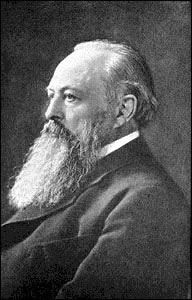
This observation was declared by John Emerich Edward Dalberg Acton, first Baron Acton (1834–1902). The following information can also be view here.
While Lord Acton spoke accurately concerning that which he observed around him, his scope was limited and thus is incorrect.
For there is only one man who has ever had absolute power. He was not corrupted by it. Quite the opposite is true. This one man held absolute power and used it to overcome corruption.
What Lord Acton actually observed is the desire for power and the desire for absolute power. This desire, a.k.a., Lust, is that which corrupts. The lust for power is what corrupts, not the possession or use of power.
The Lord Jesus has absolute power both as God and as Man. He is the Almighty God, the Everlasting Father, the Creator of all that exists in heaven and on earth, both visible and invisible. He is also Man, created by His own almighty power, in whom the very Godhead is manifested. Even though this almighty and absolute power belongs to Him by the very essence of His Godhood, He did not consider it something to be grasped (Philippians 2:6-8). Rather, by His absolute power He made Himself to be of no reputation, making Himself to be a servant who would die in the stead of those who continually corrupt all good things with their ceaseless lusting and grasping.
No, absolute power never corrupts. Absolute power is manifested in the Gospel, the preaching of Jesus Christ and Him crucified. For this preaching is the very power of God, power that accomplishes the impossible, the overpowering of all corruption to regenerate filthy and damned sinners into saints who shine forth with the glory of God.
How sad it is that the lustfulness of mankind seeks to corrupt this Gospel, grasping after God’s power, desiring to claim some form of power for self. The Gospel is incorruptible. It is perfect and holy and without flaw. It regenerates those who live in and by it so that they are made to be members of one holy communion of saints, one Church, perfect and without flaw. Anything less is not of God and is not born of His absolute power. Anything less is merely a gathering of corruption, a gathering of lustful and grasping degenerates seeking power for themselves. From such people comes the cry, “You’ll never find the perfect Church.”
The reason that such a cry is brought forth is the same reason as that of Lord Acton. His reason was that he was looking not to the one who holds absolute power, but to those who lust after and grasp for it for themselves. Where the Lord Jesus is the one to whom the congregation gathers in accord with the means by which He gathers them, that gathering is exactly what He declares it to be: His own perfect and holy body, the communion of saints, the holy catholic Church on earth.
This observation was declared by John Emerich Edward Dalberg Acton, first Baron Acton (1834–1902). The following information can also be view here.
Power corrupts; absolute power corrupts absolutely
Meaning
Literal meaning.
Origin
This arose as a quotation by John Emerich Edward Dalberg Acton, first Baron Acton (1834–1902). The historian and moralist, who was otherwise known simply as Lord Acton, expressed this opinion in a letter to Bishop Mandell Creighton in 1887:
"Power tends to corrupt, and absolute power corrupts absolutely. Great men are almost always bad men."
Another English politician with no shortage of names - William Pitt, the Elder, The Earl of Chatham and British Prime Minister from 1766 to 1778, is sometimes wrongly attributed as the source. He did say something similar, in a speech to the UK House of Lords in 1770:
"Unlimited power is apt to corrupt the minds of those who possess it"
While Lord Acton spoke accurately concerning that which he observed around him, his scope was limited and thus is incorrect.
For there is only one man who has ever had absolute power. He was not corrupted by it. Quite the opposite is true. This one man held absolute power and used it to overcome corruption.
What Lord Acton actually observed is the desire for power and the desire for absolute power. This desire, a.k.a., Lust, is that which corrupts. The lust for power is what corrupts, not the possession or use of power.
The Lord Jesus has absolute power both as God and as Man. He is the Almighty God, the Everlasting Father, the Creator of all that exists in heaven and on earth, both visible and invisible. He is also Man, created by His own almighty power, in whom the very Godhead is manifested. Even though this almighty and absolute power belongs to Him by the very essence of His Godhood, He did not consider it something to be grasped (Philippians 2:6-8). Rather, by His absolute power He made Himself to be of no reputation, making Himself to be a servant who would die in the stead of those who continually corrupt all good things with their ceaseless lusting and grasping.
No, absolute power never corrupts. Absolute power is manifested in the Gospel, the preaching of Jesus Christ and Him crucified. For this preaching is the very power of God, power that accomplishes the impossible, the overpowering of all corruption to regenerate filthy and damned sinners into saints who shine forth with the glory of God.
How sad it is that the lustfulness of mankind seeks to corrupt this Gospel, grasping after God’s power, desiring to claim some form of power for self. The Gospel is incorruptible. It is perfect and holy and without flaw. It regenerates those who live in and by it so that they are made to be members of one holy communion of saints, one Church, perfect and without flaw. Anything less is not of God and is not born of His absolute power. Anything less is merely a gathering of corruption, a gathering of lustful and grasping degenerates seeking power for themselves. From such people comes the cry, “You’ll never find the perfect Church.”
The reason that such a cry is brought forth is the same reason as that of Lord Acton. His reason was that he was looking not to the one who holds absolute power, but to those who lust after and grasp for it for themselves. Where the Lord Jesus is the one to whom the congregation gathers in accord with the means by which He gathers them, that gathering is exactly what He declares it to be: His own perfect and holy body, the communion of saints, the holy catholic Church on earth.
Friday, November 14, 2008
Evangelism and the Eighth Commandment
Thou shalt not bear false witness against thy neighbor.
Depending on the method of numbering the Ten Words or Ten Commandments, this is counted as either the Eighth or the Ninth Commandment. Since the numbering is purely an arbitrary assignment by those who honor these declarations of the Lord, and not a numbering by the Lord Himself, the number does not really matter. The content, however, does matter. The intended meaning is a matter of life and death, everlasting life and death.
This is especially true because of the impact that it has upon the Church’s witness unto the Gospel. The Gospel, or the euangelion, is the good message that bears witness to the fullness of God’s grace in Christ Jesus. The Gospel is the good message that gives life to hearts that are dead in sin. The Gospel is the message that revitalizes lives that have become buried in the worries and troubles that a sin filled world piles up over all who struggle to survive in this world.
The Gospel is Good News!
The Gospel is the good news concerning the salvation that is in and through Christ Jesus.
End of story.
Sadly, this is not where we leave it. Rather than trusting in the power of the Gospel, we turn away from this power and seek to make it about what we do. Those who claim to be the most “evangelical” are usually the ones who twist the Gospel in on itself so that instead of being the good news of Jesus Christ it becomes impossible to recognize and rather resembles a heavy burden that must somehow be carried by those who should be set free from all heavy burdens.
Often, the promoters of evangelism are the worst about this horrible abuse against the saints of God. Often the promoters of evangelism are the very worst violators of the Eighth Commandment, bearing the very worst and most horrible False Witness against their neighbors, and worse, against their brethren.
Yes. Sadly, very sadly, those who promote Evangelism and Personal Witnessing are often the worst of all those who bear false witness against their neighbors.
It is common to have a preacher or another church leader or organizer lay heavy burdens upon the hearts of the saints who gather to hear the Gospel. Rather than building them up in the knowledge of the Lord and all that the Lord serves in His Holy Communion, rather than lifting burdens from those who are drowning in their sinfulness, rather than reviving those whose ears and hearts have grown weary and need to be opened again to the precious good news of forgiveness and renewal, rather than fulfilling the office of the keys they turn to the people with a message of what they must do to be good Christians and what they must do to be good witnesses.
Of course, this is not a singular fault. The people share in this, too. They forget the power of the Gospel and turn back to their own efforts, efforts that surely fail them and leave them without true hope. Then they seek programs and training to become better witnesses in their lives and in their associations. They torment themselves over what they consider to be lost opportunities and blundered sharing attempts.
This is sad, very sad, from both perspectives. For this is not what Christ instituted for His Church. This is not the life to which our dear Lord has called us.
Jesus speaks of knowing the truth which sets us free.
What is this truth? Jesus, Himself, is this truth. We need to know Jesus and what He has done and continues to do for us through the life of the Church. We need to be reminded continually that He is the True Witness, and that we are the ones who are to are to receive His witness.
How does this miracle occur? How do we receive Jesus and the full knowledge of Him in our lives? He tells us plainly: Baptism and the Holy Communion.
This is the witness to which we are called.
Notice that I did not say the witness that we are to give. For this is the reception of God. This is how we receive Jesus, and with Jesus the fullness of God, namely, the Father and the Son and the Holy Spirit. In Baptism, with the Word of God, that is, Jesus, we receive the name of God and with His name we receive the Father and the Son and the Holy Spirit. In Baptism God Himself bears witness to us and to all the world that He is our God and that He claims us as His children as coheirs with Jesus.
When I was a child, I never needed to tell anyone that I was the son of Louis Otto Siems and Helen Ruth Siems. People knew. How? I lived with them and under their care. I received my life from them. I also wrote and spoke their name and address as my own. I lived in dependence upon them and in the protection of their care. Therefore people knew who I was in connection with them.
This is the witness that Christians are to bear, also. To bear means to carry in or on one’s person and body. Mary was the theotokos, the God-bearer, because God used her as the vessel through whom He came into the world. She did nothing to make this happen. It was worked through the Word of God that was spoken to her through the mouth of Gabriel, God’s specially appointed heavenly messenger or angel. Aside from not having an abortion, what did the blessed virgin do? When we say it like this, even from this perspective she did nothing. She did not abort the Son of God from her body. She simply acknowledged the will of God that had been spoken to her and carried the Son of Salvation until the time to be delivered came.
This is what the Church does as well. The Church carries the Son of God in her body. This is not something that she chooses to do. The Church is the blessed virgin through whom Jesus is carried in the world. Jesus lives in the Church. Like Mary, the Church simply lives as the theotokos, the God-bearer.
As the Theotokos, the Church bears The Witness, Jesus. As the saints gather to the pure administration of Jesus, that is, The Word and Sacraments of the Word, they are the Church, the presence of Jesus. This is why the assembling must not be forsaken, as is the practice of some. The Church or Ecclesia is the gathering of the communion of the saints. If there is no gathering, there is no Church.
But this Ecclesia is a special gathering. It is not a gathering of the kind that men promote. Rather, it is the gathering that is accomplished by the calling of the Holy Spirit. The Holy Spirit calls, gathers, enlightens, and sanctifies the holy Christian Church. He calls sinners to gather unto Jesus to receive what He gives through the theotokos. Namely, He gives Himself, the Word of Life. As the assembled receive Jesus into their ears they are renewed in Him in His body, the Church. Through Baptism they receive the washing of regeneration and renewal of the Holy Spirit. Through the Holy Communion they eat and drink the very body of this Holy Communion and drink the very blood of their salvation and life.
This is all God’s work. This is all God’s doing. This is all God’s Witness.
As St. Paul writes, “for as often as ye eat of this bread and drink of this cup ye do shew the Lord’s death till He come.”
This is the witness that we bear to the world. It is not OUR witness, except from the perspective that it is the Witness that we have received in Baptism and again and again in the Holy Communion.
This is God’s definition of Evangelism. It is pure. It is simple. It is easy. Why? Because it is His Witness, Jesus, at work reconciling the world unto Himself.
We do not need to make evangelism our work. That is why St. Paul tells Timothy to do the work of an evangelist. He did not tell the congregation under Timothy’s pastoral care to do the work of evangelists, but he told Timothy to do the work of an evangelist. Timothy served Christ to the congregation in preaching and in the Sacraments.
As the congregation gathers to the means of grace, this is the fulfillment of what we often label as the Great Commission of Matthew 28:18-20. If you read what Jesus says carefully, you will find that it really is this simple and easy.
So then, what about our personal witness?
Were you listening?
This IS our witness, even Jesus Christ. As we gather unto Him, we do give witness unto Him.
When this is our understanding of Evangelism, it becomes very, VERY easy and straightforward. All that we need to do is to tell people where Jesus is to be found. As we live in the freedom of the Gospel ourselves, people notice. When people ask, we simply tell what God has done for us and continues to do for us in Christ. When they ask how they can receive this for themselves, we invite them to come with us to meet Jesus. We invite them to “come and see.” As they observe the unity of the body of Christ, confessing with one mouth the great confession of the one true faith and receiving together the life of Christ’s blood, then they too may be baptized into the Holy Communion to live the life of freedom that the Truth provides.
Sharing the Gospel is not a burden. It is a joy. It is a privilege. No one who receives healing from a terrible disease finds it difficult to share with others. Perhaps the best example is the restoration of sight that some have received through medications or other treatments. No one who has suffered reduced or impaired vision or even blindness who has subsequently had that vision restored ever has any trouble telling the good news of what was done for him.
That is really the problem with how we approach evangelism. Instead of joyously telling what has been done for us, we imagine that we must do something for others. We forget that we are nothing more than witnesses unto what has already been done and what is promised by the One who has done it. We forget that this is not our work, but His. Is it any wonder that when we imagine ourselves be under the burden that only God can carry that we find ourselves struggling and totally unequal to the task?
Rather, let’s do as our Lord has commanded. Let’s gather to the washing of regeneration and renewal of the Holy Spirit and eat and drink the Supper of our Lord’s body and blood for our nurturing as His body and for our forgiveness and restoration in His blood. Let’s leave salvation to the Savior, and then, joyously tell others what He has done.
What do you think? Could this actually work?
He says it does. Moreover, He commands it. We don’t even have to figure it out for ourselves. This is His way. This is what He has ordained and commanded.
But this seems to be hard for us to acknowledge. So let’s hear it straight from the mouth of our Lord Jesus. In Acts 1:8, Luke records it in crystal clear language that cannot be misunderstood, yet our stubborn hearts often choose to misinterpret what Jesus says, as do many of our translations. Nevertheless, Luke accurately records the declaration of the Lord for us.
But you-all shall receive power of overcoming of the Holy Spirit over you-all, and you-all shall be My witnesses . . .
If we pay attention, we find that the Lord says exactly the opposite of what we usually take from this. We are inclined to hear this as what we are to make of ourselves and what we are to be determined to be and to do. But this is not what the Lord says.
He says that the Holy Spirit will overpower us and make witnesses of us. Jesus says that the Holy Spirit shall overpower us so that we cease to be witnesses of our own design and to recreate us as the witnesses that Jesus has placed in various locations in the world. HIS witnesses.
This is like the signs that a real estate agent places in locations that are under his authority. He puts up signs saying here is what I am doing. Then, when the property has been sold or rented, another sign indicating that the work has been accomplished is added, a little sign saying “SOLD”.
Jesus says that by the power of the Holy Spirit we will be His “SOLD” signs. Our hearts are the property that was for sale. He purchased us with His own life and blood. In Baptism He puts His “SOLD” sign upon us and sets us up for everyone to see. This is what He says of us when He says that we shall be His witnesses. We are His little signs throughout the world by which He tells the world what He has done.
So then, let’s not change this into a false witness. Let’s not change His witness to the world into our sinful and corrupt witness. Let’s not bear false witness unto our neighbor, not when we have already been made to be His witnesses, His pure and holy witnesses, washed and regenerated and renewed to eat and drink and live in His grace, mercy and peace. Let us be content, and more than content, let us Eucharist or Give Thanks as those who have been made to be His witnesses as members of His Holy Communion. Let’s let this be the Witness that the world sees and hears. Then both we and all who ask us will know what the Lord means when He says:
Come unto me, all ye that labour and are heavy laden, and I will give you rest. Take my yoke upon you, and learn of me; for I am meek and lowly in heart: and ye shall find rest unto your souls. For my yoke is easy, and my burden is light. (Matt 11:28-30)
Monday, March 17, 2008
Saint Patrick’s Day
 It seems to me to be a special treat that this year Saint Patrick’s Day coincides with Holy Week. After all, the focus of St. Patrick’s Day is the Gospel of our salvation, the very Gospel that is so powerfully held before us during this week of progression from our Lord’s entry into Jerusalem on Palm Sunday to the day of suffering and death to redeem us from the powers of sin, death and the devil, and finally having reestablished the eternal Sabbath or Rest, rising to everlasting life.
Truly this is a fitting time for observing the ardent zeal of St. Patrick for the Gospel. Truly St. Patrick’s Day represents for us what these final days of Lent really mean. For even as dear St. Patrick was taken captive and then became free from his captivity so that he learned to know the joyous freedom of the Gospel, so also this week draws us ever more to the preaching of Christ crucified where our freedom has been won for us. Moreover, as St. Patrick grew in his understanding of the freedom that Christ won for him, his great desire was that he could carry this liberating Gospel to those who previously were his captors and abusers. Such is the power of God’s forgiveness. As we observe the ensuing ministry of Patrick, we behold the necessity of purity in the preaching and practice by which we are made to be communicants of Christ’s body and blood. For the Gospel is emptied of its power
when it is conjoined to anything other than Jesus Christ and Him crucified.For more on the history of St. Patrick, Aardvark Alley has a nicely written piece.
Technorati Tags: +St. Patrick, Holy Week, Gospel, freedom
Subscribe to:
Posts (Atom)